
Are IV-delivered stem cells actually different from a joint injection? In many cases, yes. While a localized injection is designed to address a specific area, IV stem cell therapy is intended to support broader, system-wide treatment goals through intravenous delivery. Understanding that difference matters if you are comparing options for recovery support, inflammation-related concerns, or overall regenerative wellness goals.
This guide explains how IV delivery works, how it differs from targeted injections, and what types of biologic sources may be discussed during treatment planning. It also covers realistic expectations, safety considerations, and what to expect during a physician-led consultation. Before deciding whether this option fits your goals, it helps to start with a clear definition of what IV stem cell therapy is and what it is designed to do.
What Is IV Stem Cell Therapy?
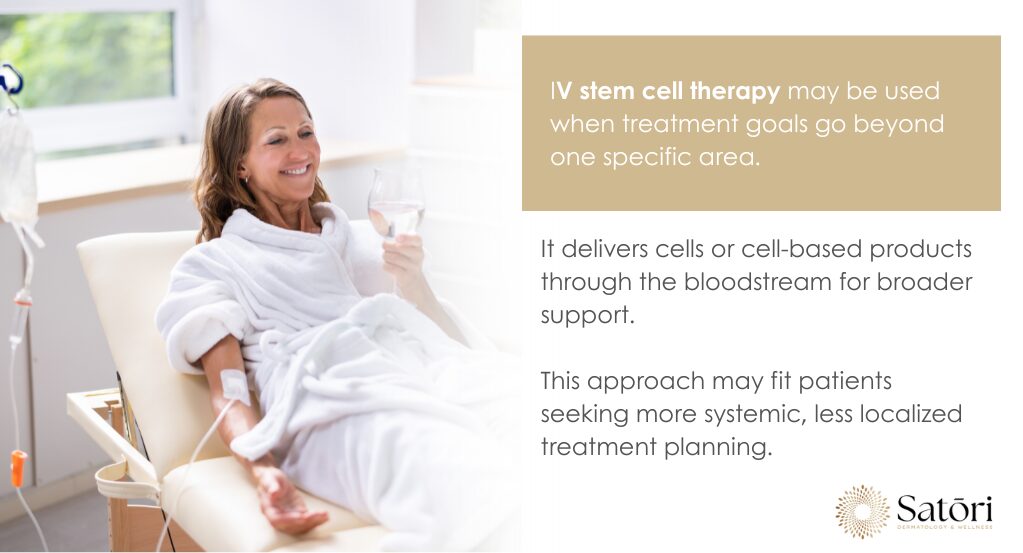
When treatment goals extend beyond one specific area, intravenous delivery may be considered as an alternative to localized injections. IV stem cell therapy involves placing cells or cell-derived products into the bloodstream so they can circulate more broadly throughout the body. This route is typically discussed when a patient’s concerns are more systemic than site-specific.
This delivery method is typically considered for:
- Systemic support: When concerns are not limited to one joint, tendon, or treatment area.
- Broader treatment planning: When a physician is evaluating body-wide inflammatory or recovery-related goals rather than a single localized issue.
- A less localized route: For patients who may prefer an infusion-based approach instead of multiple targeted procedures.
Patients may explore this approach as part of a broader regenerative care plan focused on recovery support, wellness optimization, and physician-guided treatment planning. Review our broader regenerative program overview to see how these options may fit into a personalized care strategy.
How IV Stem Cell Therapy Works: The Science of Cellular Signaling
IV stem cell therapy is generally discussed in terms of cellular signaling rather than dramatic, immediate tissue replacement. Many protocols focus on paracrine signaling, a process in which cells release signaling factors such as cytokines, growth factors, and extracellular vesicles. These biologic messengers are studied for their potential role in supporting immune signaling, inflammatory regulation, and tissue-repair processes.
Another concept often discussed is the homing effect, which refers to how biologic signals may interact with areas of inflammation or tissue stress. Researchers also examine the pulmonary first-pass effect, since intravenously delivered cells may pass through the lungs early in circulation.
Because outcomes vary by protocol, source material, and patient factors, timelines and responses should be discussed during a physician evaluation. At Satori, treatment planning may include a single infusion or a series approach depending on the patient’s goals and the clinician’s recommendation.
Should You Choose IV Infusion or Targeted Injection?
The right delivery method depends on whether your treatment goals are localized or more systemic in nature. In general, IV infusion is considered when broader support is being evaluated, while targeted injections are used when a physician wants to treat a specific joint, tendon, or tissue area. Appointment length and recovery experience can vary depending on the protocol, but IV infusions usually involve monitored chair time, while targeted injections may involve temporary soreness at the treatment site.
| Feature | IV Stem Cell Infusion | Targeted Injection |
| Typical Use Case | Broader treatment planning | A specific joint or localized treatment area |
| Delivery Route | Intravenous infusion | Injection into a targeted area |
| Visit Experience | Monitored infusion appointment | Shorter in-office procedure |
In some cases, a physician may discuss combining systemic IV support with a localized injection-based approach when a patient’s goals include both broader wellness considerations and a specific treatment area. Whether that makes sense depends on the diagnosis, the biologic being used, and the overall treatment plan.

Choosing the Right Biologic Source for IV Stem Cell Therapy
The biological source used in treatment planning matters just as much as the delivery method. During a consultation, your provider may discuss the origin of the cells or cell-derived material, how they are processed, and whether that source aligns with your goals, medical history, and treatment setting.
- Umbilical cord-derived sources (often discussed as donor-based biologics): These are sometimes considered in regenerative protocols when broader treatment planning is being evaluated.
- Bone marrow-derived cells: These are more commonly associated with orthopedic and localized treatment discussions.
- Adipose-derived cells: These are obtained from a patient’s own fat tissue and may be reviewed in certain regenerative care models.
When comparing autologous and donor-based options, the discussion usually centers on sourcing, processing, candidacy, and the overall goals of care. It is also important to distinguish live-cell therapies from exosome-based products.
Exosomes are not living cells; they are extracellular vesicles studied for their signaling role. Because these categories differ in composition, regulation, and intended use, they should be reviewed carefully during treatment planning.
See what we commonly evaluate and treat to understand how your symptoms and goals may influence treatment planning.
Understanding Safety: Regulatory Status and Clinical Red Flags
Safety starts with understanding how these treatments are regulated and how a clinic evaluates candidacy. Regulatory classification can vary depending on the source material, processing method, and intended use, which is why physician oversight and transparent documentation matter.
Patients should also ask about informed consent, sterility standards, sourcing records, and possible short-term side effects, which may include fatigue, headache, chills, or discomfort related to the IV process. Watch for these red flags when comparing providers:
Unclear sourcing
The clinic cannot explain where the biologic material comes from or how it is handled.
Lack of documentation
There is no clear discussion of sterility, screening, or informed consent.
Overpromising
The provider makes “miracle cure” claims or guarantees outcomes.
Sales pressure
The conversation feels more like a limited-time offer than a medical evaluation.
Review our guide on evaluating stem cell clinics before your consultation to better understand what questions to ask and what standards to look for.
Preparing for Your IV Stem Cell Therapy: What to Expect
At Satori, treatment planning begins with a physician evaluation to determine whether IV therapy, localized injections, or a combination approach is appropriate for your goals, symptoms, and medical history.
Preparation and Infusion Day
Before your appointment, you may be asked to prioritize hydration, get adequate sleep, and avoid alcohol for a short period. Patients should also disclose supplements, medications, and relevant medical history during the evaluation process.
On the day of treatment, the team may monitor vitals before, during, and after the infusion, depending on the protocol being used. Some treatment plans involve a single visit, while others may be discussed as a series based on the physician’s recommendation.
Cost and Sourcing
Pricing can vary based on the biologic source, treatment design, dosing considerations, and the clinical standards involved in the protocol. The most useful next step is a physician-led consultation that reviews candidacy, safety, and treatment goals rather than choosing a provider based only on location.

How to Evaluate IV Stem Cell Therapy as a Treatment Option
Moving from online research to a real treatment decision requires a structured conversation about safety, goals, and medical fit. In some cases, providers may discuss both systemic and localized treatment approaches depending on the patient’s needs. Use this five-step framework to think through your next questions before scheduling care.
- Define your primary goal: Are you focused on a specific treatment area, broader wellness concerns, or both?
- Choose the route: Ask whether IV delivery, targeted injections, or a combined approach makes the most clinical sense.
- Clarify the biologic type: Understand the difference between live-cell therapies, donor-based options, autologous sources, and exosome-related products.
- Verify quality standards: Ask about sourcing, sterility, handling, and physician oversight before moving forward.
- Understand the treatment plan: Review the expected timeline, follow-up structure, and cost considerations for your specific care plan.
The right plan starts with a personalized medical assessment, not a one-size-fits-all menu of services. If you want a physician-led conversation about your options, schedule a consultation with our team in Franklin.
Frequently Asked Questions
Is IV stem cell therapy FDA-approved for anti-aging or general wellness?
IV stem cell therapy is generally discussed as an investigational regenerative treatment rather than a standard anti-aging or general wellness therapy. Regulatory status depends on the product, source, and intended use, so patients should ask whether a treatment is part of a formal clinical pathway, what standards the laboratory follows, and how the provider explains safety and compliance.
What is the difference between IV stem cell therapy and exosome therapy?
The main difference is that stem cell therapy involves living cells, while exosome therapy involves extracellular vesicles associated with cellular signaling. Because these are different biologic categories, they differ in composition, regulation, and how they are discussed in treatment planning. A physician should explain which option is being considered and why it may or may not fit your goals.
Does IV therapy work better than localized injections?
Neither option is universally better. The right choice depends on whether the treatment focus is more systemic or more localized. IV therapy may be considered when broader treatment goals are being discussed, while localized injections are typically used for a specific joint, tissue, or problem area. In some cases, a provider may review whether a combination approach makes sense.
What conditions are currently being explored for IV stem cell treatment?
IV stem cell therapy continues to be explored in regenerative medicine research across a range of systemic and recovery-related applications. Because these uses are still being studied and treatment models are not one-size-fits-all, candidacy should be evaluated through an individualized medical assessment rather than assumed from online information alone.
How much does IV stem cell therapy cost?
Cost can vary based on the biologic source, treatment plan, dosing considerations, and the clinical standards involved in the protocol. Because regenerative treatments are highly individualized, the most accurate pricing information should come from a consultation that reviews your goals, candidacy, and recommended approach.
How do I find a safe stem cell IV provider near me?
To find a safe provider, prioritize clinics led by board-certified physicians who offer transparent sourcing and sterility documentation for their biologics. Avoid any facility that promises “miracle cures” or fails to perform a thorough medical intake before recommending a procedure. A reputable provider will discuss realistic expectations and provide a documented consent process that outlines potential risks. To speak with a qualified specialist about your options, you can contact Satori Dermatology and Wellness for a personal evaluation.