
Erectile dysfunction (ED) affects millions of men and can significantly impact quality of life. As new treatments emerge, many are looking beyond prescription medications. Three options gaining attention are shockwave therapy, PRP (Platelet-Rich Plasma), and stem cell therapy.
Each of these therapies takes a different approach to the treatment of erectile dysfunction. While some patients report positive outcomes, clinical research shows varying results. Understanding how they work, what the research says, and what you can expect helps you make more informed choices.
This article compares shockwave therapy, PRP, and stem cell therapy for erectile dysfunction. We’ll review how each method works, the possible benefits, risks, and the state of current evidence.
Note: Shockwave therapy, PRP, and stem cell therapy are not currently approved by the U.S. Food and Drug Administration (FDA) specifically for the treatment of erectile dysfunction. While some research supports their use, long-term effectiveness and safety remain under investigation. If you’re considering one of these therapies, it’s important to work with a qualified medical provider. A thoughtful conversation can help place any new treatment into a broader, long-term plan for managing your sexual health.
What Is Shockwave Therapy for Erectile Dysfunction?
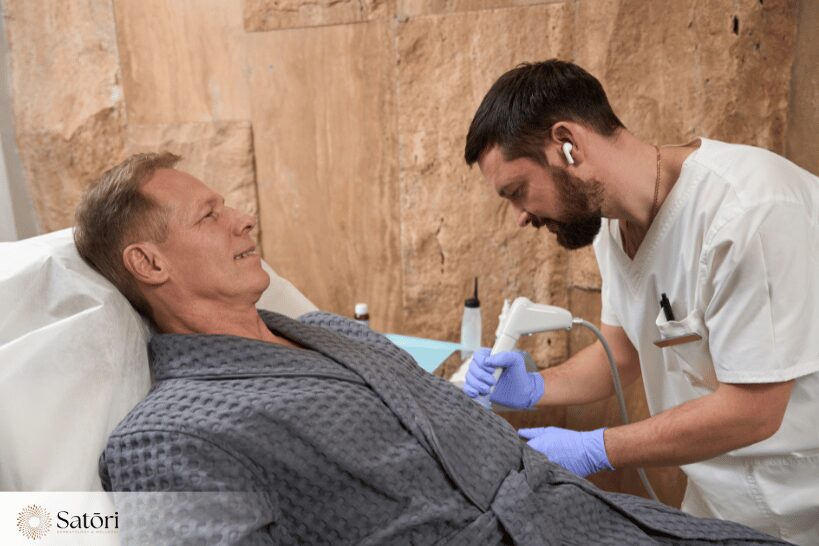
Shockwave therapy is a non-invasive treatment that uses targeted sound waves to improve blood flow in the penis. The clinical term is low-intensity shockwave therapy, or LiSWT. While it has long been used for conditions like kidney stones and soft tissue injuries, urologists have more recently introduced it as a potential option for treating erectile dysfunction.
The treatment involves applying sound waves to the penis using a wand-like device. This may stimulate small blood vessel growth and help restore blood flow—an important part of achieving and maintaining an erection. At the University of Utah Health, shockwave therapy is typically offered to men who haven’t responded well to medications or who prefer to avoid more invasive procedures.
Treatment is done in a clinical setting without anesthesia. There’s usually little to no downtime, and side effects are rare.
That said, shockwave therapy is still considered an experimental option. While some early data suggest potential benefit, researchers are still studying how well it works long term and whether it should be used alone or together with existing treatments (University of Utah Health, n.d.).
Cost and treatment protocols vary between clinics, depending on the number of sessions and the technology used.
Related Article: How To Evaluate Stem Cell Clinics in TN
What is Platelet-Rich Plasma (PRP) Therapy?
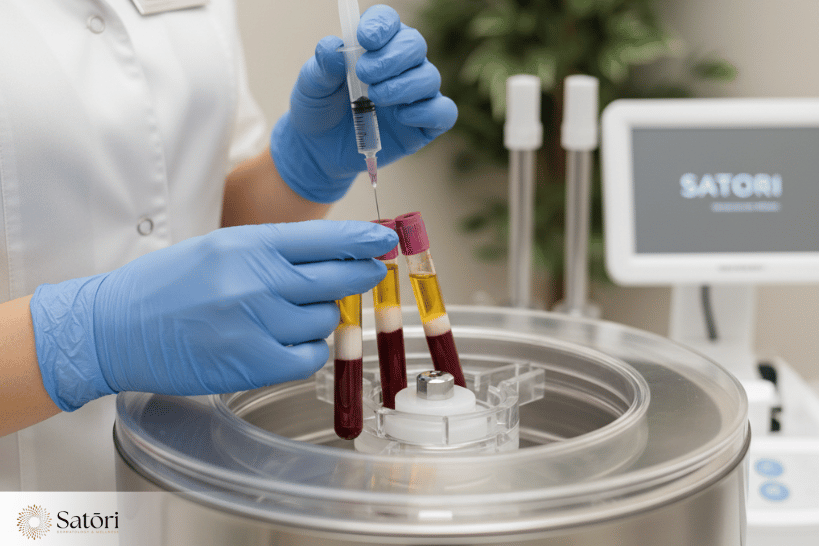
PRP therapy, often marketed as the “P-Shot®,” uses a person’s own blood. A clinician draws a small sample, processes it in a centrifuge to isolate platelets, and injects the resulting plasma—rich in growth factors—into various parts of the penis. The intent is to support tissue repair and enhance blood supply.
PRP is used elsewhere in medicine to treat joint and tendon injuries because platelets can signal healing. However, as the Cleveland Clinic notes, there’s no strong scientific evidence that PRP injections improve erectile function (Cleveland Clinic, 2023), although many clinics have turned to PRP to remedy ED and have seen results.
It’s a relatively low-risk procedure. Reported complications include:
- Bruising
- Swelling
- Infection (rare)
Side effects are mild because the biologic material comes from the patient’s own body.
Some clinics, like Satori, use the P-Shot® for men to also increase the penis size (girth and length), though again, scientific evidence does not support those expectations. You should only proceed if you’re fully informed about the experimental nature of this approach and are comfortable with uncertain results.

What is Stem Cell Therapy for Erectile Dysfunction?
Stem cell therapy injects undifferentiated cells—often taken from bone marrow, fat tissue, or umbilical sources—into erectile tissue. The hope is that these cells aid the regeneration of blood vessels, smooth muscle, and nerves.
Stem cells are used in early research for a range of conditions, and ED is no exception. However, as the 2024 Journal of Sexual Medicine study makes clear, commercial use is outpacing research.
“Despite the limited evidence, an increasing number of clinics in the U.S. offer these treatments.” (Hammad et al., 2024)
The study used Google Trends to analyze public search interest in stem cell therapy for ED over the past five years. Notably:
- Only six clinics nationwide openly advertised stem cell ED treatment
- Average out-of-pocket costs ranged from $5,000 to $10,000 per treatment
- Interest in stem cell therapy was highest in wealthier states like California, New York, and Arizona
- Men in zip codes with household incomes above $200,000 showed significantly higher search rate increases
While the theory behind the treatment is promising, the efficacy of stem cell therapy for ED remains unproven. It has not been demonstrated in large, long-term human trials, but it has been used and has seen efficacy, just not on a large scale.
Comparing the Three Treatments, Side-by-Side
To better understand the core differences, here’s how the options stack up:
| Treatment | Description | Invasiveness | FDA Approved? | Evidence Strength | Average Cost |
| Shockwave Therapy | Low-intensity sound waves to stimulate blood flow | Non-invasive | No | Moderate to low | $3,000–$6,000 |
| PRP (P-Shot®) | Concentrated blood platelets are injected into the penis | Minimally invasive | No | Low | $1,500-$2,500 |
| Stem Cell Therapy | Regenerative cells are injected to rebuild tissue | Minimally invasive | No | Very low – experimental | $5,000–$10,000+ |
When to Consider These Therapies — and When Not To
Shockwave therapy, PRP, and stem cell therapy are not part of standard first-line treatment for erectile dysfunction. Each is still considered experimental, and none are approved by the FDA specifically for this condition. Even so, these approaches are being offered more often in clinical settings, especially for men seeking options that go beyond oral medications or surgical procedures.
You may want to consider one of these therapies if you’ve tried other treatments without success or if you’re looking for an approach that targets the underlying tissue or vascular changes involved in erectile dysfunction. These treatments may also appeal to men who prefer to avoid medication or who are interested in options that focus on improving blood flow or supporting tissue recovery.
People with early-stage erectile dysfunction, especially when caused by blood flow issues, may be more likely to respond to these interventions. Depending on the therapy, overall health, and treatment goals, response can vary.
It’s important to understand that outcomes are not guaranteed and that results, when seen, may take time to develop. These therapies are not typically covered by insurance and may involve out-of-pocket costs. Discussing the risks, potential benefits, and your own health history with a qualified provider can help you decide if one of these options fits into your treatment plan.
While researchers continue to study long-term effectiveness, these therapies are already being used in clinical practice under expert supervision. In selected cases, and with the right expectations, they may offer a reasonable path forward when more established treatments haven’t met your needs.
Moving Forward with Confidence and Clarity
Erectile dysfunction can be difficult to navigate, but today’s treatment landscape offers more possibilities than ever. Shockwave therapy, PRP, and stem cell therapy each approach the problem differently—none are guaranteed, yet each holds potential.
By understanding how these therapies work, what the research says, and where your needs fit in, you’ll be better prepared to move forward with clarity, not guesswork. The best next step is an informed conversation with a provider who understands both the science and your personal goals.
References
Cleveland Clinic. (2023). What is a P-Shot? Cleveland Clinic. https://my.clevelandclinic.org/health/treatments/p-shot
Hammad, M. A., Martinez, J. R., Miller, J., Sultan, M., Emini, E., Jenkins, L., Barham, D. W., & Yafi, F. A. (2024). (239) Stem cell therapy for erectile dysfunction across states – fact or fiction? The Journal of Sexual Medicine, 21(Supplement_1). https://doi.org/10.1093/jsxmed/qdae001.229
University of Utah Health. (n.d.). Shockwave therapy for erectile dysfunction (ED). Retrieved from https://healthcare.utah.edu/mens-health/conditions/erectile-dysfunction/shockwave-therapy