
Nerve pain limits movement, focus, and quality of life. For many, it doesn’t respond well to medication or traditional treatment.
At Satori, we offer stem cell therapy for neuropathy in Franklin, TN, as part of a careful, physician-directed approach. We use regenerative medicine to support the body’s natural healing and help manage symptoms like burning, tingling, and weakness.
Symptoms & Causes
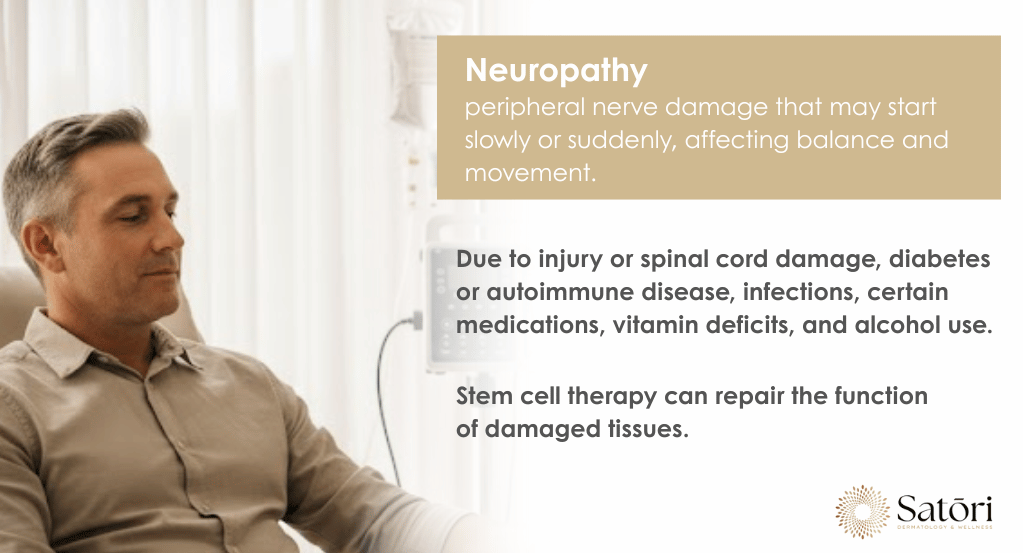
Neuropathy occurs when nerves outside the brain and spinal cord become damaged. It can take many forms, sometimes progressing slowly, other times beginning suddenly. The pain may feel sharp, dull, or electric. In some cases, symptoms impact your balance or ability to move with control.
Common symptoms of neuropathy include:
- Numbness in arms, legs, hands, or feet
- Tingling or “pins and needles”
- Burning or shooting pain
- Muscle weakness or coordination problems
- Sensitivity to touch, sometimes to the point of pain
- Changes in skin texture or color in affected areas
Neuropathy has many causes.
For some, it develops after an injury, such as damage to the spinal cord. For others, long-term conditions are to blame—diabetes, autoimmune disorders, infections, or exposure to certain medications. Vitamin deficiencies and alcohol use can also play a role.
At Satori, we take your full health picture into account. We treat neuropathic pain as a symptom with a source, not just a cluster of sensations.
How Stem Cells May Help Neuropathy
Stem cell therapy belongs to a field called regenerative medicine. It focuses on repairing or restoring function to damaged tissues using the body’s own systems. Stem cells are unique—they can develop into different kinds of cells and release growth factors that support healing. They may help reduce inflammation and promote nerve repair.
For neuropathy, our stem cell therapy in Franklin works by:
- Supporting the healing of damaged nerves
- Modulating the immune response in inflammatory or autoimmune cases
- Encouraging new blood vessel growth to nourish nerve tissue
- Helping slow or prevent further nerve degradation
This approach is not a cure for neuropathy, but it can provide relief when paired with the right treatment plan. In many cases, symptoms become less severe or easier to manage—for others, stem cells help increase the benefit of services like physical therapy.
We don’t recommend this treatment for every case. We evaluate symptoms, diagnostic results, and medical history to identify patients most likely to benefit.

What to Expect with Satori
The process begins with an in-person consultation. Our team will review any testing you’ve already done and ask about the timeline of your symptoms. We’ll also look at what treatments you’ve tried in the past and how well those worked.
If stem cell therapy is a good match, we’ll walk you through each step. The procedure usually involves collecting cells from your fat tissue or bone marrow. The sample is processed and then injected into the affected area under sterile conditions. The procedure is done in the office with local anesthesia, and most patients return home the same day.
Some people begin to feel a change within a few weeks. For others, it may take a few months to notice improvement.
Because nerve tissue heals slowly, results tend to build gradually over time.
We may recommend pairing stem cell therapy with physical therapy or other supportive services to increase benefit and support long-term recovery.
We believe good outcomes come from consistency, which is essential as many patients evaluate stem cell clinics and the support they offer after treatment. That’s why we monitor your progress closely and adjust your care plan if needed. Our goal is to help reduce symptoms in a way that improves your daily function, not simply react to flare-ups.
Are You a Candidate for Stem Cell Therapy?
Stem cell therapy is generally considered low-risk when it uses your own cells. Serious side effects are rare, and complications are uncommon if the procedure is done by experienced providers under controlled conditions. At Satori, all treatments follow strict safety protocols from preparation to follow-up.
Not everyone is a candidate for stem cell therapy. It may not be suitable if you have widespread, rapidly progressing nerve damage or certain underlying medical conditions. We also don’t recommend it for patients with active infections or bleeding disorders. Your full history matters, and we review it before recommending treatment.
This therapy may help if you’ve had chronic neuropathy that hasn’t responded well to medication or physical therapy. It’s also an option for those looking to avoid or delay more invasive procedures. If stem cell therapy is not the right choice, we’ll help you explore other appropriate paths without pressure.
Moving Forward, Thoughtfully
Neuropathy care should be thoughtful, not rushed. At Satori in Franklin, TN, we offer stem cell therapy as part of a steady, evidence-informed approach. If you’re living with nerve pain that resists standard care, we invite you to explore whether this treatment may fit your needs.
Our team will guide you through every step—from assessment to follow-up—with clarity and care. If you’d like to learn more or schedule a consultation, contact us today. We’re here to answer questions, review your options, and help you make an informed decision about your health.
FAQs
How much does stem cell therapy for neuropathy cost?
The cost varies based on the treatment plan and the number of sessions needed. Because the process is personalized, we provide specific pricing after your evaluation. While stem cell therapy can be an investment, we offer flexible payment options to make care more accessible.
Can stem cell therapy cure neuropathy?
There is currently no cure for neuropathy. Stem cell therapy does not reverse damage entirely, but it may help reduce symptoms and slow further progression. Some patients experience noticeable improvements in sensation, movement, or daily comfort, especially when therapy is combined with other forms of care.
Will insurance cover stem cell therapy?
At this time, most insurance providers do not cover stem cell therapy for neuropathy. This is because the FDA considers many applications of regenerative medicine investigational. If you choose to move forward, our team will walk you through costs and available financing options.