
Tixel Laser Treatment is a non-laser skin resurfacing procedure designed to improve fine lines, skin texture, and overall skin quality with significantly less downtime than traditional CO2 laser treatments. Using thermo-mechanical technology, Tixel delivers controlled heat through a medical-grade titanium tip to stimulate collagen production and trigger natural skin renewal.
At Satori Dermatology & Wellness in Franklin, TN, board-certified dermatologist Dr. Jill Crowell uses Tixel treatments to address concerns such as crepey eyelid skin, enlarged pores, acne scars, and sun damage. The treatment offers a middle ground between mild cosmetic facials and aggressive laser resurfacing, providing noticeable results with a shorter recovery period.
Below, we break down how the technology works, its specific treatment modes, and a day-by-day recovery guide. We also cover pain management, costs, and side effects. Tixel is a standout among our cosmetic laser treatments because it delivers medical-grade results while respecting your schedule.
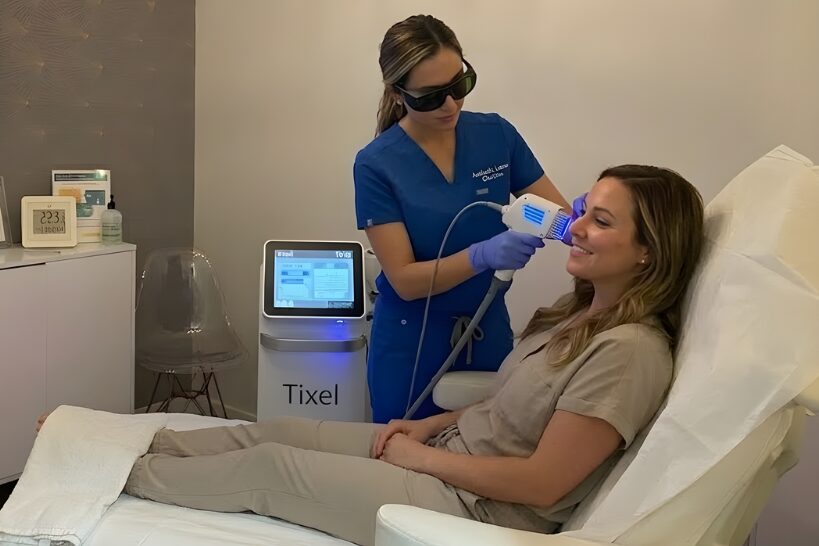
Tixel Laser Treatment: Understanding Thermo-Mechanical Resurfacing
Despite its common name, Tixel laser treatment actually uses zero light energy to resurface the skin. Instead, Tixel skin rejuvenation relies on thermo-mechanical technology. This system uses a medical-grade titanium tip to deliver brief, controlled pulses of pure heat directly to the skin surface. Because it avoids the intense radiation of traditional lasers, Tixel provides a safer profile for delicate areas like the eyelids. This technology type directly influences your downtime, comfort, and suitability for various skin types.
How Tixel Laser Treatment Remodels Your Skin
This treatment uses a heated medical-grade titanium tip to create a fractional grid of controlled micro-injuries in the skin.
These tiny channels trigger the body’s natural wound-healing response, stimulating the production of collagen and elastin. Over the following weeks, the skin gradually becomes smoother, firmer, and more even in tone.
Because the technology relies on pure thermal energy rather than radiation, providers like Dr. Crowell can safely treat delicate areas such as the eyelids and under-eye skin.
Ready to improve skin texture and reduce fine lines with minimal downtime?
Schedule a consultation with Dr. Jill Crowell at Satori Dermatology & Wellness to find out whether Tixel Laser Treatment is the right solution for your skin.
Choosing Your Intensity: The Three Tixel Modes
How much downtime can your schedule actually accommodate? This question determines which of the three Tixel modes Dr. Crowell recommends for your specific skin goals.
- Full Ablative: Targets deep texture and crepey skin. Results require fewer sessions, but you should expect 3 to 5 days of redness and visible micro-crusting.
- Medium Ablative: A middle-ground series balancing meaningful collagen stimulation with a faster recovery period than full ablation.
- Open-Channel: This “glow” mode increases permeability rather than resurfacing. It creates channels for medical-grade add-ons like exosomes, PRP, or tranexamic acid. Downtime is minimal, making it ideal shortly before events.
Dr. Crowell customizes every setting based on your skin type and history, prioritizing safety for those at risk for melasma or post-inflammatory hyperpigmentation.
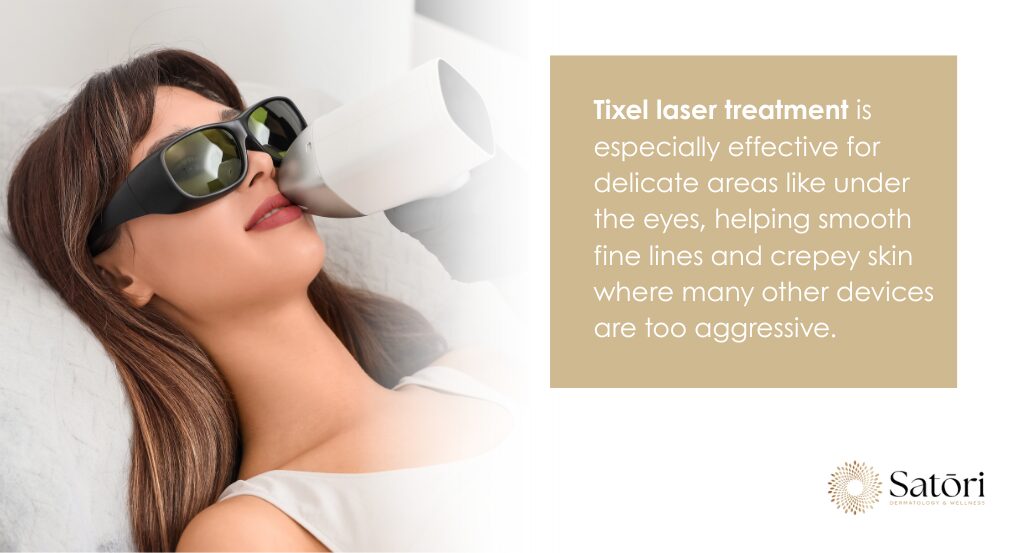
What Areas Respond Best to Tixel Laser Treatment?
Does your concealer settle into the fine crinkles around your lower lids by midday? While many devices are too aggressive for thin periorbital skin, Tixel Laser Treatment excels at tightening these delicate zones. It is most predictable for:
- Fine lines and crepey texture
- Enlarged pores and acne-scar smoothing
- Sun damage appearance
Expect visible skin quality improvement rather than a surgical transformation for severe eyelid hooding or major laxity. Don’t overlook hand rejuvenation as another high-impact use case for aging skin.
What Happens During a Tixel Treatment Session
Does the thought of thermal pulses cause you anxiety? Most patients describe the treatment as a manageable heat, similar to a mild sunburn. Your visit follows a clear clinical path: medical cleansing, topical numbing for deeper settings, precision treatment passes, and soothing post-care. For medium or full-ablative treatments, plan to avoid same-day social events while initial redness settles. Schedule a consultation to customize your settings and downtime.
Tixel Treatment Downtime and Aftercare Timeline
How soon can you return to your social calendar after Tixel? Most patients experience significantly less downtime than traditional CO2 lasers, with social recovery typically occurring within two to four days.
- Day 0: Expect warmth, redness, and mild swelling.
- Days 1 to 3: Skin appears pink with visible micro-crusts. Avoid heat, heavy sweating, and tanning for 24 hours.
- Days 3 to 7: Micro-dots flake away naturally; do not pick or scrub.
Stick to gentle cleansers, bland moisturizers, and physical SPF. Avoid retinoids, AHAs/BHAs, Vitamin C, and benzoyl peroxide for seven days. For Fitzpatrick IV through VI skin, we utilize conservative settings and brightening pre-care to mitigate PIH risks safely. Seeking a zero-downtime glow instead? Explore our HydraFacial.
How Much Does Tixel Laser Treatment Cost?
Why do most practices avoid listing exact prices online? Pricing is modular, calculated by your specific goals rather than a fixed fee. Key cost drivers include:
- Treatment Area: Eyes versus full face and neck.
- Intensity: Open-channel versus ablative modes.
- Session Volume: Multi-treatment packages.
- Add-ons: Enhancements like exosomes or PRP.
Discuss maintenance and event timing during your personalized evaluation.
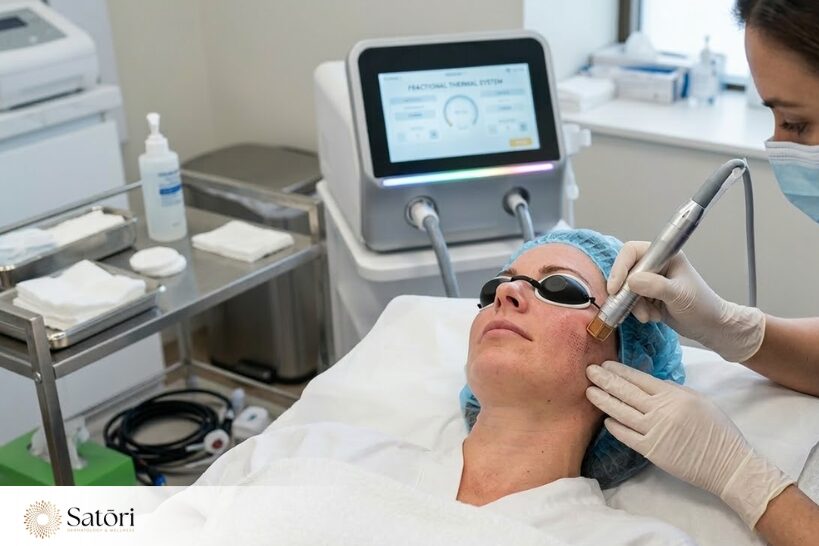
Is Tixel Laser Treatment the Right Choice for Your Skin?
Tixel occupies a unique space in skin rejuvenation by providing a modular approach to healing. Unlike traditional lasers that rely on radiation, Tixel uses precise thermal energy to trigger collagen production with significantly less downtime. While a series of sessions is typically required to match the intensity of an aggressive CO2 treatment, the trade-off is a faster return to your daily routine.
Tixel is your best fit if:
- You are targeting fine lines, crepey under-eye texture, or enlarged pores.
- You can manage two to four days of social downtime.
- You prefer a non-laser, heat-based technology.
You may prefer an alternative if:
- Fractional CO2: You want significant results in a single session and can commit to a two-week recovery.
- RF Microneedling: Your primary concern is deep acne scarring or structural skin tightening.
- Surgery: You have severe skin laxity or heavy eyelid hooding that requires a physical lift.
To prepare, schedule your initial session at least two weeks before major social events or travel. During your consultation, bring a list of your current skincare products so we can tailor your post-treatment regimen. If you are ready to see how Tixel fits your goals, book an appointment with Dr. Crowell or contact Satori Dermatology to discuss our full suite of cosmetic laser options.
Who Is a Good Candidate for Tixel Laser Treatment?
Tixel Laser may be an excellent option for patients who want noticeable skin rejuvenation without the extended recovery associated with traditional laser resurfacing.
You may be a good candidate if you:
- Have fine lines, crepey eyelid skin, or mild wrinkles
- Want to improve skin texture, acne scars, or enlarged pores
- Prefer less downtime than CO2 laser treatments
- Are looking for a non-laser resurfacing option
During your consultation at Satori Dermatology & Wellness in Franklin, Dr. Crowell will evaluate your skin concerns and determine whether Tixel treatment or another procedure is the best fit for your goals.
Tixel Treatment FAQs
Is Tixel a laser?
No, Tixel is not a laser. It is a thermo-mechanical treatment that uses heat from a medical-grade titanium tip rather than light-based radiation or ultrasound. This distinction is crucial because the absence of radiation makes it exceptionally safe for the sensitive skin around the eyes. It is also suitable for patients who may not be ideal candidates for traditional laser resurfacing.
What is the typical Tixel treatment downtime?
Most patients experience two to four days of social downtime, though this varies based on your chosen intensity setting. Low-intensity open-channel treatments may involve only a few hours of redness, while full ablative settings lead to micro-crusting that lasts up to five days. You can usually apply mineral makeup after 24 hours to cover lingering pinkness. At Satori Dermatology & Wellness, we provide specific post-care balms to accelerate this healing phase.
What are the most common Tixel side effects?
The most frequent side effects include temporary redness, mild swelling, and the formation of tiny brown micro-crusts on the skin surface. You may also feel a sensation similar to a moderate sunburn for the first 24 hours following the procedure. While rare, more significant risks like infection or pigmentation changes can occur if post-care instructions are ignored. Contact your provider immediately if you experience blistering or pain that worsens after the first day.
Is Tixel safe for darker skin tones?
Yes, Tixel is generally considered safer for Fitzpatrick IV through VI skin types compared to many traditional light-based lasers. Because it uses pure thermal energy, there is a lower risk of the light-induced heat scattering that often causes post-inflammatory hyperpigmentation. Even with this safety profile, we often use more conservative settings and specific pre-treatment skin primers for darker tones. This ensures the best results while protecting your natural pigment.
How many Tixel sessions do I need and when will I see results?
Most patients see the best results after a series of three to six sessions spaced four to six weeks apart. While some initial glow is visible within a week, the most significant improvements in skin tightening and texture appear three to six months later. This delay occurs because your body needs time to build new collagen and elastin fibers. Maintenance sessions are typically recommended once or twice a year to preserve your rejuvenation.
How does Tixel compare to CO2 laser or RF microneedling?
Tixel offers a middle ground, providing more significant resurfacing than microneedling but with less downtime than a CO2 laser. While CO2 remains the gold standard for deep wrinkles, Tixel is often preferred for eyelid tightening and general texture due to its faster recovery. For patients comparing these options, it is helpful to view our full range of cosmetic lasers to see which technology aligns with your specific recovery window. RF microneedling remains a distinct choice for deep structural lifting rather than surface refinement.