
Have you invested in medical-grade skincare or laser treatments only to feel like your results have plateaued? Many patients experience this frustration when active ingredients cannot penetrate deeply enough to stimulate real collagen remodeling. This is where Tixel and stem cell modalities are gaining attention as a smarter regenerative approach.
True skin transformation often requires synergy between energy-based devices and regenerative biologics. By combining Tixel and stem cell modalities, physicians can create a clinically grounded protocol designed to stimulate collagen remodeling while enhancing topical absorption. Tixel uses thermo-mechanical energy to create precise micro-channels that prime the skin to absorb regenerative topicals such as exosomes or growth factors during a critical post-treatment window.
This guide explains how Tixel works, the reality of stem cell skincare, and how to evaluate if the protocol fits your goals. Physician-led planning is essential when merging energy-based treatments with regenerative biology. If you are exploring options broadly, see our laser treatments to understand our comprehensive approach. Here is how Tixel’s unique technology prepares your skin for better results.
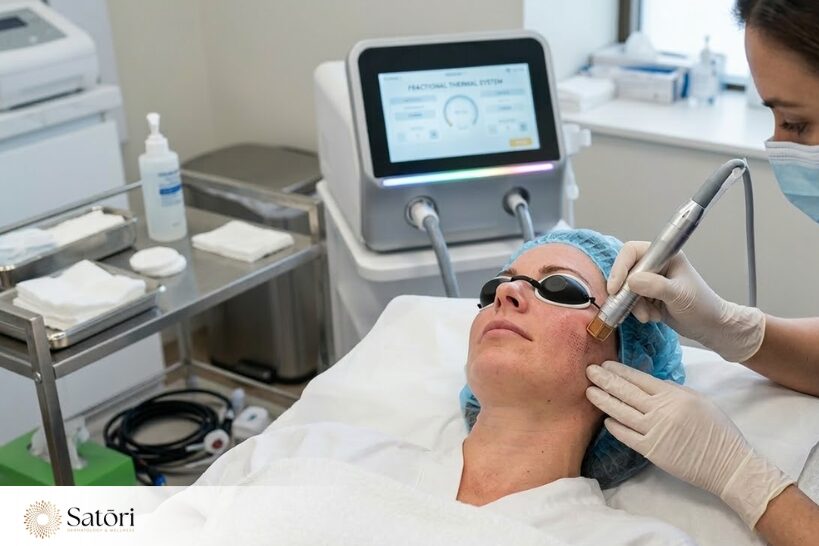
Understanding Thermo-Mechanical Action: How Contact Heat Rejuvenates Skin
Tixel is neither a laser nor a microneedling device. Tixel uses Thermo-Mechanical Action (TMA), where a medical-grade titanium tip heated to approximately 400°C briefly contacts the skin to create precise micro-channels. This controlled thermal contact stimulates collagen remodeling without the carbonization associated with CO₂ lasers or the punctures involved in microneedling.
This approach is often used for delicate zones like the eyelids and neck. While fractional CO2 involves aggressive downtime, Tixel is gentler. Unlike RF microneedling, it achieves results without piercing the skin.
The Window of Opportunity: Pairing Tixel and Stem Cell Modalities
Most high-end skincare fails because it cannot get where it needs to go. The skin’s outer barrier naturally limits the penetration of many large-molecule skincare ingredients, which is why expensive serums often produce modest results on their own. Tixel overcomes this by creating thousands of controlled micro-channels that temporarily increase permeability for high-value biologics, such as exosomes or growth factors.
In a clinical setting, we apply these biologics within minutes of the procedure to utilize this specific “window of opportunity” while the pathways are most receptive. This office-based delivery is fundamentally different from home application because it bypasses the natural barriers that usually exclude regenerative ingredients.
This synergy between Tixel and stem cell modalities aims to support collagen signaling, improve texture, and encourage a quicker-looking recovery by delivering active signals directly to the dermal layers. However, timing and delivery are only half the battle. Not everything marketed as a “stem cell” treatment is the same.
Defining “Stem Cell” Modalities: What Are You Actually Buying?
Are we talking about live stem cells or common skincare ingredients? In regenerative aesthetics, it is crucial to distinguish between three categories:
Plant Extracts
Botanical ingredients marketed as “stem cell” products but typically containing antioxidant plant compounds rather than human biologic material.
Conditioned Media
Solutions containing growth factors and signaling proteins harvested from cultured cells.
Exosomes
Microscopic vesicles that transport regenerative signals between cells.
Evidence is evolving, and outcomes depend on product concentration and provider technique. At Satori, we ensure safety by requiring third-party sterility documentation and reputable sourcing. Now, let’s walk through what a responsible clinical protocol looks like in practice.
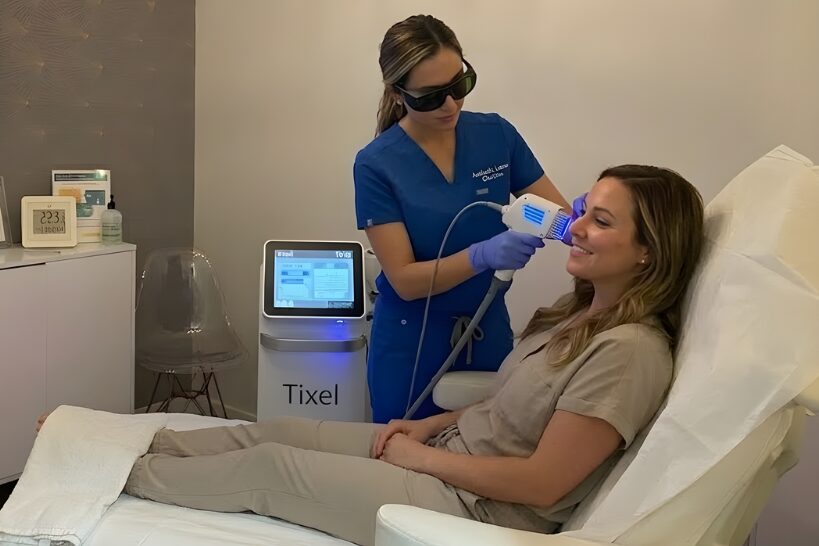
What to Expect: Your Tixel and Stem Cell Treatment Timeline
You want skin tightening and texture refinement, but extended downtime may not fit your schedule. Prepare for your appointment by pausing retinoids and avoiding sun for five days. Arrive with clean skin for an efficient visit. After cleansing and topical numbing, Dr. Crowell performs tailored Tixel passes, adjusting intensity for delicate areas like the eyelids.
The first hour is the critical delivery window. We apply the stem-cell-derived serum immediately while Tixel-created micro-channels are fully open and most receptive to biologics. Afterward, prioritize gentle cleansers, barrier support, and SPF. Avoid heat or sweating for 24 hours and do not pick at micro-crusting.
Most patients require a series of sessions spaced four to six weeks apart to maximize collagen production. To maintain a “fresh” glow between these sessions, consider pairing your regimen with HydraFacial treatments for optimal hydration and clarity.
Identifying Your Best Path: Tixel Benefits and Limitations
If you notice concealer settling into fine lines or “crepey” texture on your eyelids, Tixel offers a specialized solution. It is uniquely safe for delicate zones like the periorbital area, neck, and décolleté where traditional lasers are often too aggressive. Many patients now combine Tixel and stem cell modalities to accelerate recovery and amplify results.
Tixel excels at treating texture, enlarged pores, acne scarring, and hand rejuvenation. For significant laxity or deep scarring, we utilize our full device services to select the most effective tool for your specific goals.
Maximizing Value: Are Tixel and Stem Cell Modalities Right for You?
Is the most expensive serum always the most effective? True value depends on the delivery protocol, not just the label. To evaluate if adding premium biologics to your Tixel session fits your goals, ask these three questions:
- What is my priority? (Texture refinement vs. faster recovery).
- Is it medical-grade? (Verify sterility and QC documentation).
- Is application immediate? (Biologics require open Tixel micro-channels to be effective).
Dr. Crowell screens for risks like active infections or recent tanning. Because results appear gradually, a personalized consult ensures these topicals match your unique skin needs.

Your Next Step: Creating a Targeted Plan for Tixel and Regenerative Care
The clinical advantage of a Tixel and stem cell protocol is the “delivery window” created through thermo-mechanical action. While Tixel provides the controlled resurfacing needed to smooth the skin’s surface, it also creates temporary micro-channels that bypass the skin barrier. This allows regenerative signals, such as exosomes or stem cell serums, to reach the structural depths they could never access through standard topical application. By applying these biologics within the critical sixty-minute window, we turn a high-end serum into a targeted medical treatment. Tixel provides the pathways, and the biologics provide the regenerative fuel.
To determine how to best integrate these technologies into your routine, use this framework:
- For minimal downtime and crepey texture: Start by exploring a standalone Tixel series to reset surface smoothness and collagen signaling.
- For maximizing regenerative topicals: Prioritize same-day application timing and specific physician-led aftercare to protect your investment.
- For deeper scars, pigment, or laxity: Consider combination planning using our full cosmetic laser treatments for more aggressive remodeling.
Dr. Crowell provides personalized consultations to ensure your plan is safe and results-oriented. If you are ready to address specific texture concerns, book an appointment online or contact us with any questions about our regenerative protocols.
Frequently Asked Questions
Does Tixel hurt? Will I need numbing cream?
Most patients describe the Tixel sensation as a brief, intense heat or tingling similar to a mild sunburn. While many find lower-intensity treatments manageable without assistance, we frequently apply a topical anesthetic for more intensive passes or sensitive areas. Our providers at Satori Dermatology & Wellness can adjust the treatment settings to balance your personal comfort with your aesthetic goals.
How much downtime should I expect from a Tixel skin rejuvenation system?
Downtime typically lasts between two to five days and involves mild redness and tiny, temporary micro-crusts on the skin. The recovery period depends on the intensity of the treatment and how strictly you follow your aftercare routine. We recommend prioritizing barrier repair creams and broad-spectrum SPF during the first week to protect the skin as it heals and regenerates.
How many sessions do most people need for skin tightening and skin rejuvenation?
Most patients achieve optimal results through a series of three to six sessions spaced four to six weeks apart. While you may see initial improvements shortly after your first visit, collagen remodeling continues to build over several months. Once you reach your primary goals, a maintenance session every six to twelve months helps sustain your skin’s rejuvenated appearance and structural integrity.
When should stem cell based serums or exosomes be applied after Tixel?
Exosomes or stem cell serums should be applied immediately after your Tixel treatment while the micro-channels are still open. This immediate window, lasting about sixty minutes, ensures maximum absorption of the biologics into the deeper layers of the dermis. Please avoid applying unknown DIY products at home immediately after treatment, as professional-grade biologics require specific sterility and quality control standards.
Are exosomes the same thing as stem cells and are they FDA-approved?
Exosomes are not live stem cells, but rather tiny signaling vesicles that carry growth factors and proteins to communicate with damaged skin cells. They are currently used in regenerative aesthetics to support tissue repair, though they are not FDA-approved for specific medical treatments. It is essential to ask your provider about the sourcing, sterility, and quality control of the exosome product used.
Can Tixel be combined with other treatments like injectables or facials?
Yes, Tixel can be effectively integrated into a comprehensive plan involving Botox, dermal fillers, or professional facials, provided the sequencing is managed by a physician. The timing between these treatments is important to ensure the skin has adequate time to heal. A HydraFacial is an excellent resource to maintain skin hydration and clarity between your scheduled Tixel sessions.
To receive a personalized rejuvenation plan, book an appointment with Dr. Crowell or contact us with your specific questions.